

When branches and woody prunings accumulate, they are often burned, chipped or removed. However, there is another option that keeps the material on site while creating valuable structure for wildlife. In this article, I explain how to build a living dead hedge using coppiced willow stakes, branches and brash.
A conventional dead hedge consists of woody material packed between rows of upright stakes. Mine went a step further. Rather than using only dead timber for the supports, I coppiced fresh willow and drove the thick stems into the ground as living stakes.
The willow subsequently rooted and produced new growth. This created a living framework around the dead material: a structure designed to provide immediate shelter while becoming stronger, greener and more useful to wildlife over time.
What is a dead hedge?
A dead hedge is a linear structure made by placing branches, twigs and other woody material between upright stakes. The stakes contain the material and allow it to be built upwards rather than spread across the ground as a broad brash pile.
Despite its name, a dead hedge can support a surprising amount of life. Gaps between the branches provide shelter for invertebrates, amphibians, reptiles, small mammals and birds. As the wood becomes damp and begins to decay, it can also support fungi and other organisms involved in breaking down dead plant material.
A dead hedge can be useful as:
- a way to retain branches and woody prunings on site;
- a habitat feature within a garden, woodland or field edge;
- a screen or informal boundary;
- a sheltered corridor through which wildlife can move;
- a barrier around areas that need some protection;
- a source of structural diversity in an otherwise open landscape.
It should not automatically be treated as secure livestock fencing. Unless specifically engineered and regularly maintained for that purpose, a dead hedge is better regarded as a habitat feature or supplementary barrier. It may also offer livestock some shelter from wind and driving rain.
Why learn how to build a living dead hedge?
The main weakness of an ordinary dead hedge is that its supporting stakes will eventually rot, particularly where they enter the soil. The packed branches also settle and decompose over time, so the structure needs periodic maintenance.
Using fresh willow stakes can change that process. Willow has a strong ability to root from freshly cut stems when conditions are suitable. Once established, the stakes can produce roots, shoots and leaves rather than simply decaying in the ground.
This creates a hybrid structure with two complementary elements:
- the dead branches provide immediate shelter and habitat;
- the living willow can form a longer-lasting framework around them.
The result is a living dead hedge: a woody habitat feature that begins functioning immediately but can continue developing over several growing seasons.
Using coppiced willow as living stakes
For my hedge, I coppiced willow and selected tall, thick, freshly cut stems for the uprights. I drove them firmly into the soil in two roughly parallel rows, creating a channel into which I could place branches and brash.
Freshness matters because willow stems are more likely to establish when they have not been allowed to dry out. Moist ground is also helpful, although willow should not be planted blindly near drains, buildings, walls or other structures where vigorous roots or future tree growth could cause problems.
The stakes need enough depth in the soil to remain stable while the centre is filled. Their spacing will depend on the size and shape of the available material. Closely spaced stakes contain finer brash more effectively, while larger branches can often be held by wider spacing.
I used substantial stems because thin rods would have been more likely to bend under the outward pressure of the packed branches. Thick living stakes also have greater potential to develop into durable, rooted willow uprights that can continue supporting the hedge as they grow.
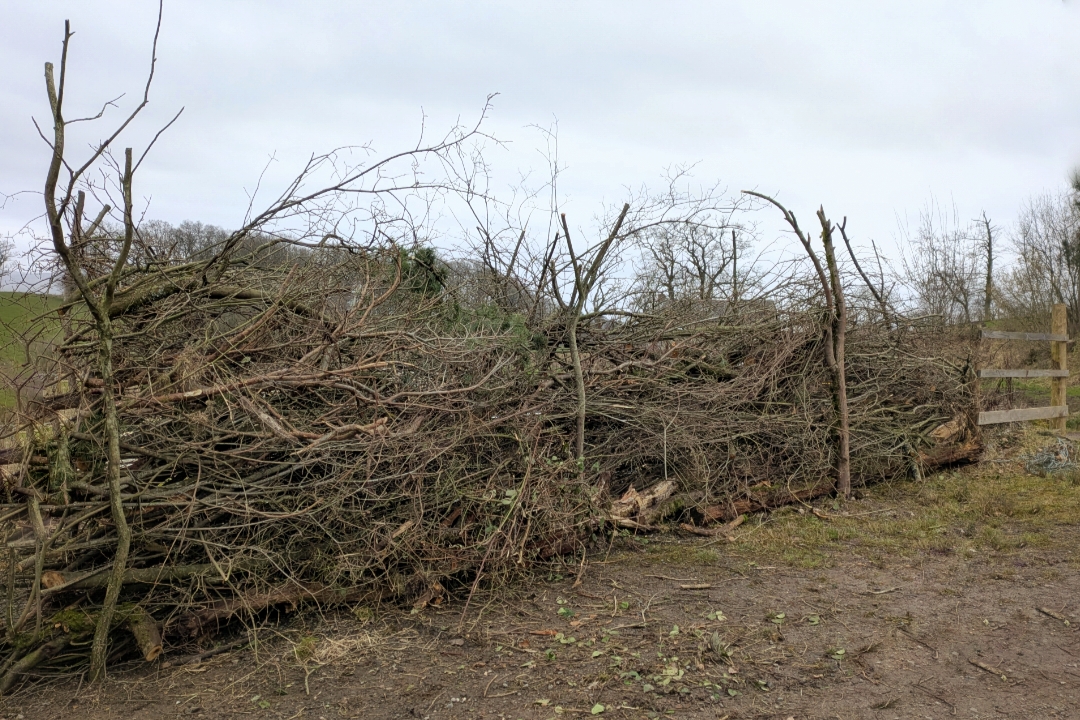
How to build a living dead hedge step by step
The basic construction process was straightforward, although the work was physically demanding because of the volume of material involved.
- I selected the route. The hedge followed a linear section where it could create useful cover without obstructing access.
- I coppiced fresh willow. I retained tall, thick stems to use as living uprights.
- I installed two rows of stakes. These created the sides of the hedge and contained the woody material.
- I added larger branches first. More substantial pieces helped form the basic structure.
- I packed smaller branches and brash between them. This filled larger gaps and created a dense but irregular interior.
- I built the material up gradually. Alternating the direction and shape of branches helped the contents interlock.
Learning how to build a living dead hedge is less about achieving a perfectly tidy structure and more about creating a stable framework with plenty of varied spaces for wildlife.
I did not try to make the structure perfectly neat or uniform. Its ecological value comes partly from variation: tightly packed sections, larger cavities, shaded areas, dry twigs and damp wood near ground level can all provide different conditions.
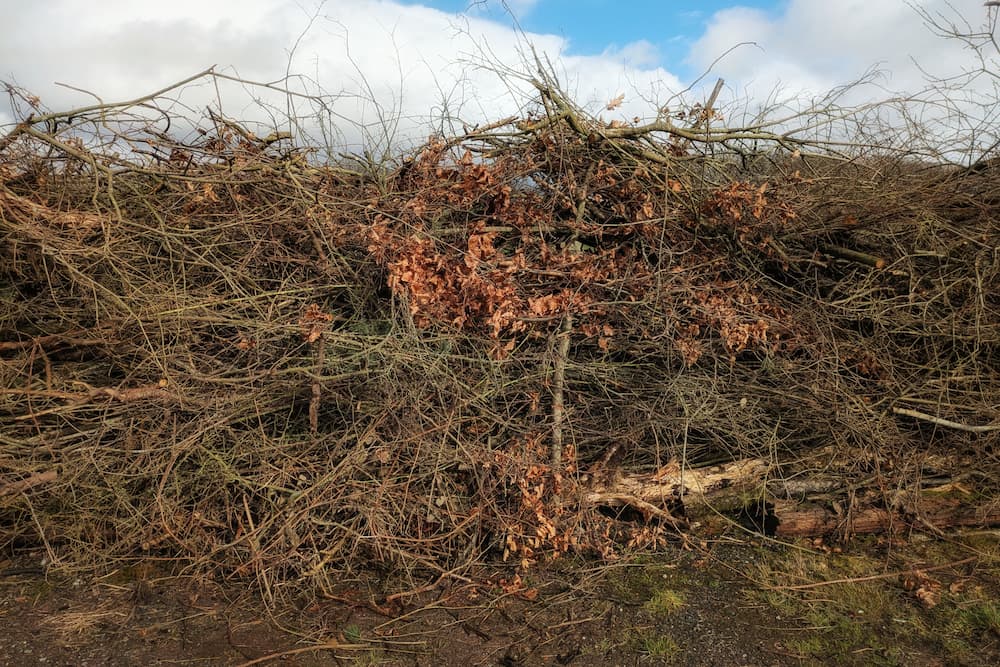
What materials can go into a dead hedge?
A dead hedge can make use of many kinds of untreated woody material that might otherwise be chipped, burned or transported away.
Suitable material can include:
- tree and shrub prunings;
- coppiced branches;
- twiggy brash;
- small logs;
- crooked branches that are difficult to stack elsewhere;
- woody stems from hedge maintenance.
A mixture of sizes usually works better than using fine twigs alone. Larger branches create strength and internal spaces, while smaller material fills the structure and helps hold everything together.
Avoid treated timber, painted wood, wire, plastic or any other material that may be harmful to wildlife.
Why dead wood and dead hedges matter for wildlife
Dead wood is one of the most valuable habitat resources in a healthy woodland or wooded landscape. Far from being waste, fallen branches and decaying timber support complex communities of fungi, bacteria and invertebrates. Many species depend on dead or dying wood for food, shelter or breeding sites, while other animals benefit indirectly by feeding on the organisms it supports.
Dead hedges add this resource in a particularly useful form. Instead of leaving all the material in one compact pile, they create a long, dense structure with a wide range of conditions: dry outer twigs, shaded cavities, damp wood near the ground and progressively decaying material within the centre.
Birds may use the branches as shelter, perching or nesting places. Small mammals can move beneath and through the structure, while amphibians may benefit from the cool, damp spaces that develop near ground level.
Numerous invertebrates live in and around decaying wood. Beetles, flies, wasps and other insects may use it during different stages of their life cycles. Fungi and microorganisms gradually break the wood down, returning nutrients to the surrounding soil and helping sustain the wider woodland ecosystem.
That abundance of invertebrate life can also provide food for birds, bats, amphibians and small mammals. In this way, retaining dead wood supports far more than the organisms living directly inside it.
A linear dead hedge can also help connect other habitat features. A brash pile creates one refuge, but an extended hedge can function as a sheltered corridor between woodland, scrub, long grass or an existing hedgerow.
Hedgerows are among Britain’s most widespread semi-natural habitats and can support a wide range of wildlife. Although a dead hedge is not equivalent to an established native hedgerow, it can introduce some of the same valuable qualities: shelter, connectivity and structural complexity. You can learn more about the importance of hedgerows for wildlife on the Woodland Trust website.
Letting the willow framework grow
The willow stakes began producing new shoots after planting. That growth was an important part of the design rather than an accidental result.
As the stakes root and increase in diameter, they should remain useful for longer than ordinary dead stakes. Their shoots also add living foliage above the deadwood structure, increasing shade, shelter and vertical diversity.
However, living willow may still require occasional management. If every shoot is left indefinitely, the stakes could eventually develop into sizeable trees. Selective pruning or pollarding could keep the willow at a manageable height without removing the rooted uprights that support the hedge.
Those future cuttings could then be woven through the existing hedge, used to replace damaged sections or added to the centre as the original brash settles. In that sense, the structure can provide some of the material needed for its own renewal.
Adding ivy and native honeysuckle
I also planned to establish ivy and native honeysuckle along the hedge. As these climbers grew through the branches, they could help knit the structure together while adding further layers of foliage, flowers and berries.
Native ivy can provide dense, evergreen shelter. Once mature enough to flower, it also supplies valuable nectar and pollen during autumn, when relatively few other plants remain in bloom. Its berries then provide food for birds later in the year. The Royal Horticultural Society describes ivy as an important source of shelter and late-season food for wildlife.
Native honeysuckle, or woodbine, would add a different set of benefits. Its fragrant flowers can support moths and other pollinators, while its berries are eaten by birds. Its twining stems could also weave through the brash and willow growth.
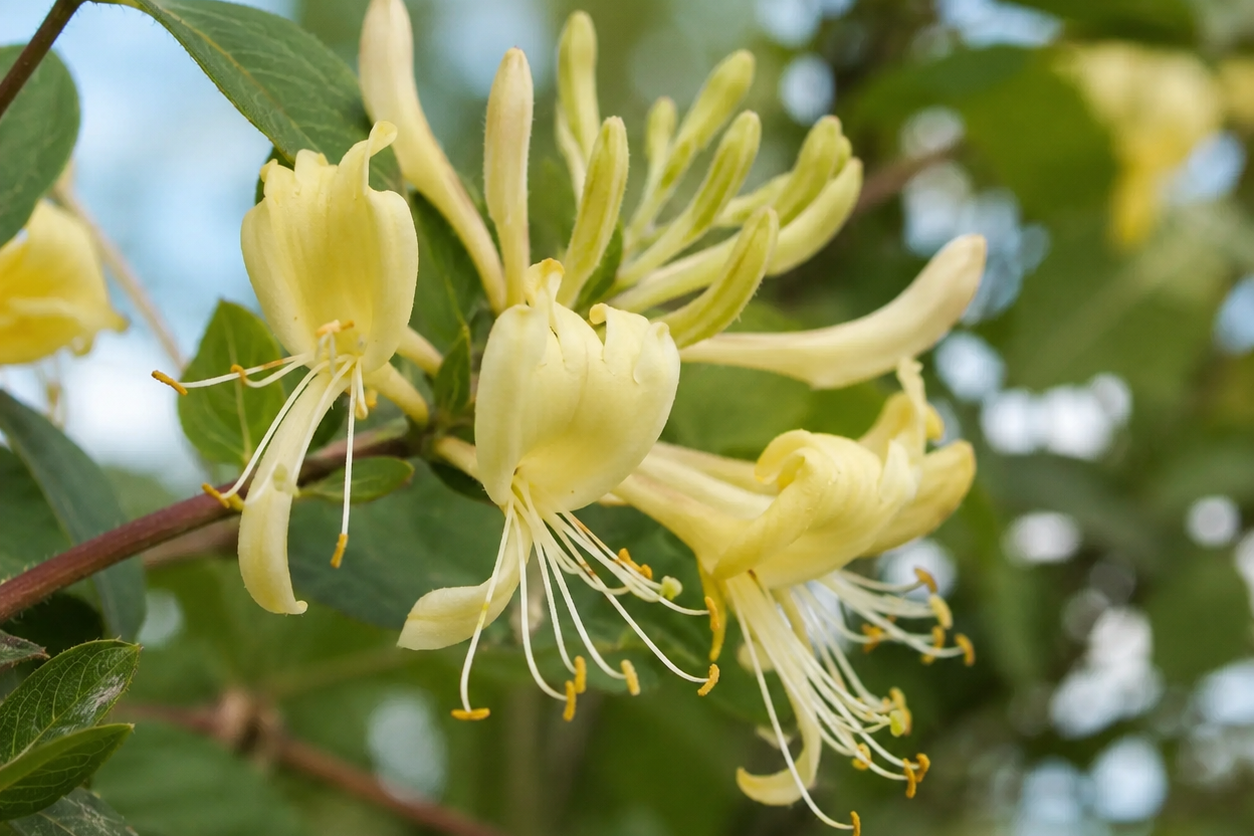
These climbers would not transform the hedge immediately. Ivy, in particular, may take time to reach its mature flowering phase. However, the aim was to create a structure that became richer and more integrated as the years passed.
Maintaining a living dead hedge
A dead hedge is not maintenance-free. The branches gradually settle as small twigs decay and the structure compresses.
Fortunately, maintenance can be simple:
- add new woody prunings to the top as the contents settle;
- push loose branches back between the stakes;
- replace any supports that fail to establish;
- prune or pollard the willow if its growth becomes too large for the site;
- weave suitable willow shoots back through the structure;
- manage climbers if they overwhelm nearby young trees or paths.
Regular additions can keep the hedge functioning while avoiding the need to dispose of new brash elsewhere.
Where should you build one?
A living dead hedge can work in a wildlife garden, woodland edge, orchard, field margin or other area where a linear habitat feature is useful.
Before building one, consider:
- whether the landowner has given permission;
- how large the willow may become;
- the location of drains, walls, utilities and buildings;
- whether the structure could obstruct access or visibility;
- the potential fire risk during prolonged dry weather;
- whether children, livestock or the public could pull branches loose;
- whether nesting birds or other wildlife are already using the material.
A dead hedge beside a frequently used path may need to be especially stable, with sharp branch ends kept inside the structure. Similarly, it should not be placed where it could narrow a gateway or interfere with essential land management.
More than a pile of branches
Learning how to build a living dead hedge is largely about recognising woody waste as a resource.
The branches in this structure could have been burned, chipped or removed. Instead, they became immediate cover for wildlife. The coppiced willow stakes added the possibility of a durable living framework, while ivy and native honeysuckle introduce evergreen shelter, nectar, flowers and berries.
The finished hedge combines several ecological ideas in one feature: coppicing, deadwood retention, living willow, native climbers and habitat connectivity.
This project forms part of a wider effort to create more space for wildlife through practical, small-scale interventions. Another example is our work growing Devil’s-bit Scabious for marsh fritillaries and other pollinators.
Not every dead hedge needs to be built in exactly this way. Even a simple structure made from ordinary stakes and locally produced branches can be valuable. However, using living willow creates an opportunity to build something that does not merely decay, but develops.
A living dead hedge starts as a line of branches. With suitable materials, thoughtful positioning and occasional management, it can become an increasingly complex boundary where living growth and decaying wood support wildlife together.