
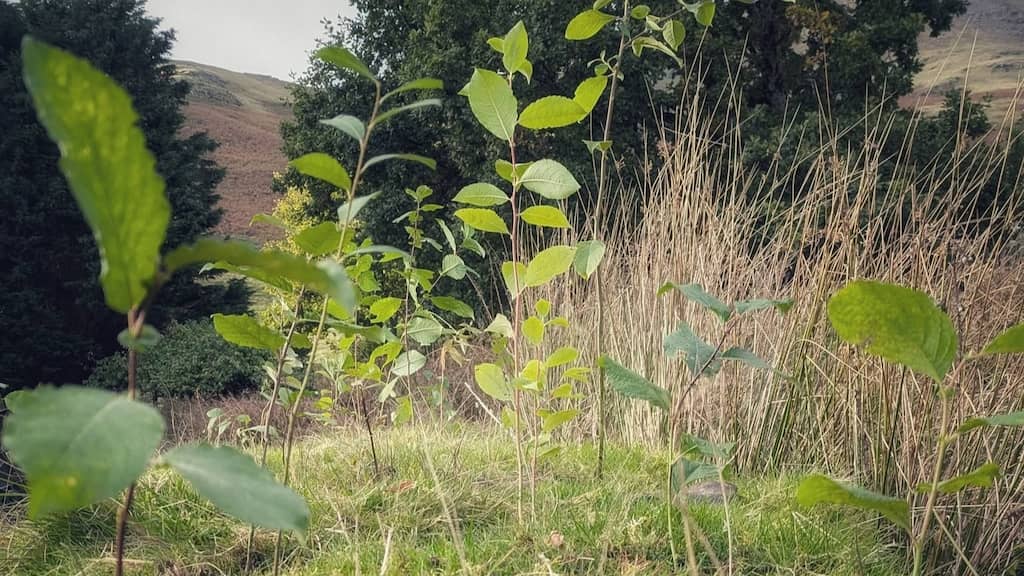
We’ve been busy planting native willow and alder trees in the Lake District on some of the land where a few of our Highland cattle will spend the winter. It’s another small step towards creating a more varied, wildlife-rich landscape here in Cumbria.
Planting native trees brings many benefits. As well as creating habitats for wildlife, the trees will provide shelter and natural browse for our cattle. We’ve planted them alongside a beck, where their developing root systems will also help stabilise the banks and reduce soil erosion.
Giving Unwanted Saplings a New Home
These saplings were kindly donated by Larch Cottage Nurseries.
Willow and alder readily self-seed, sometimes germinating in pots alongside other plants grown for sale. Normally, these unwanted seedlings would be removed during routine weeding, but with the nursery’s permission, we’ve been able to give some of them a new home.
What might otherwise have been discarded now has the opportunity to grow into something valuable for wildlife and our grazing cattle.
Why We’ve Chosen Willow and Alder
Both willow and alder are native to Britain and thrive in damp ground, making them well suited to planting alongside the beck.
Willow is particularly valuable for biodiversity, even rivalling oak with regards to the remarkable diversity of insects that it supports. Its early flowering catkins provide an important source of nectar and pollen for emerging pollinators, while the leaves support numerous moth and butterfly caterpillars.
Alder also supports a wide range of wildlife. Its seeds provide food for birds such as siskins and redpolls, while its roots form a partnership with nitrogen-fixing bacteria, allowing it to thrive in relatively nutrient-poor soils.
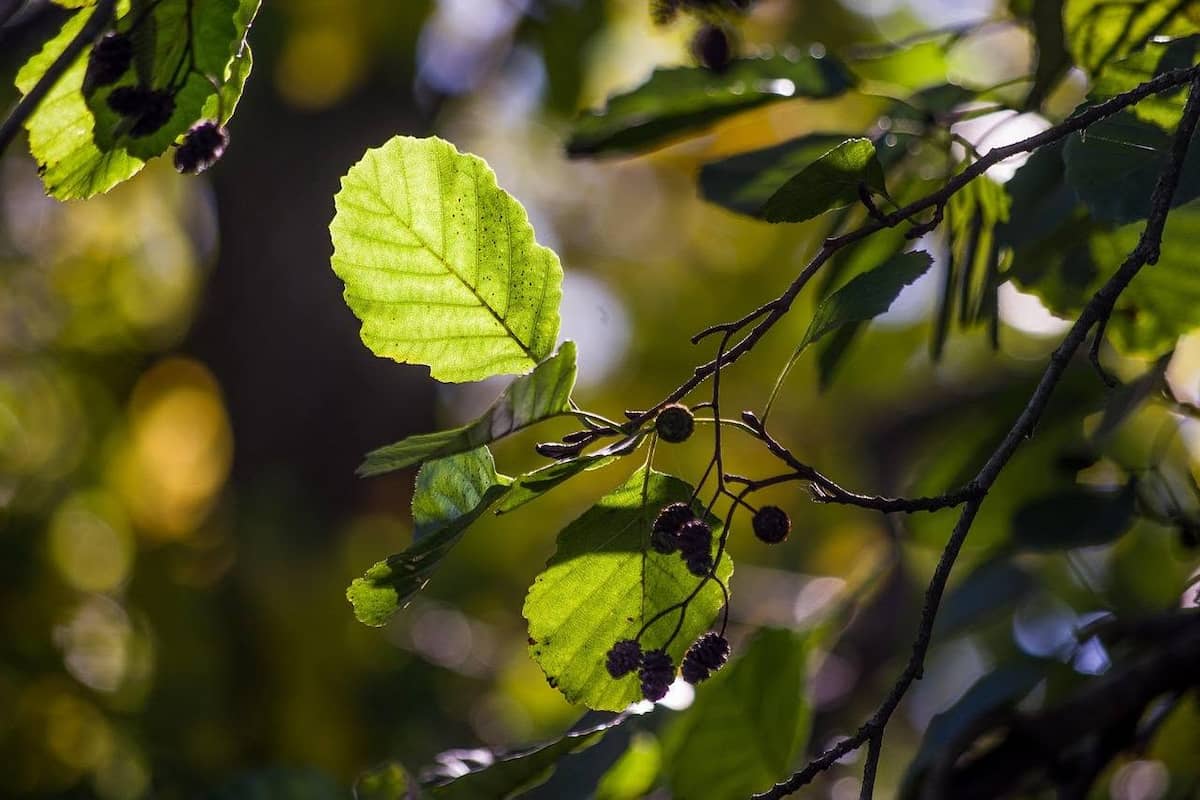
Both species are valuable components of wet woodland habitats, where they provide food, shelter and breeding opportunities for a wide range of wildlife.
Planting Native Trees Alongside Grazing Cattle
Our Highland cattle are hardy animals, well suited to living outdoors throughout the year. Nevertheless, trees can provide valuable shelter from harsh weather and shade during warmer months.
Established trees can also provide valuable natural browse. Tree leaves have a different nutritional profile from pasture grasses, offering additional minerals, trace elements and bioactive plant compounds.
Willow, for example, contains salicylates, flavonoids and polyphenols associated with anti-inflammatory activity. Other trees contain tannins, some of which have demonstrated potential to help control gastrointestinal parasites in grazing livestock. Access to a diverse range of suitable plants may therefore offer benefits beyond basic nutrition.
Of course, the young saplings will need protecting from grazing and trampling until they’re sufficiently established.
We’re interested in creating a landscape where grazing livestock and native trees complement one another, rather than treating livestock-keeping and wildlife conservation as separate activities.
Small Changes That Make a Difference
Planting native trees is just one part of our efforts to create more opportunities for wildlife. For example, on the land we grazed last year, we built a living dead hedge using coppiced willow, which provides shelter for wildlife while allowing the living stakes to grow.
These projects aren’t about transforming the landscape overnight. They’re about making thoughtful improvements and allowing natural processes to develop over time.
Our newly planted willow and alder saplings might not look like much just yet, but we’re looking forward to watching them grow and seeing what wildlife they attract in the years ahead.