
When we begin managing a piece of land here in Cumbria, carrying out a baseline species survey is one of the first ways we seek to understand what is already there.
Before judging whether grazing or other habitat work has benefited wildlife, we need a starting point: a record of the species using the site before our management has time to make a meaningful difference.
During 2025, we carried out a baseline species survey on a piece of land we were managing at the time in Cumbria , recording the birds and butterflies we encountered across the site.
The result was not a formal ecological assessment or an exhaustive inventory. It was a practical first-year baseline: a snapshot of the wildlife already present near the beginning of our involvement.
Although we no longer manage this particular site, the survey remains an important part of our story. It helped shape how we think about conservation grazing, observation and evidence-led land management.
Why a Baseline Species Survey Matters
It is tempting to introduce cattle, create habitat features and then attribute every subsequent wildlife sighting to the work being carried out.
In reality, many of those species may already have been present.
A baseline gives us something against which later observations can be compared. It helps us distinguish genuine change from assumption and encourages us to pay close attention before intervening.
For us, that means recording what we find near the beginning of our involvement rather than immediately claiming ecological success.
It also means recognising the limitations of informal recording. A list of observations cannot tell us everything about a site, but it can provide a useful foundation for future monitoring and more informed management decisions.
Birds Recorded During 2025
Some birds announced themselves loudly, while others appeared only briefly or remained hidden in quieter corners of the site.
Across the year, we recorded 62 bird species, ranging from familiar garden and farmland birds to species of significant conservation concern.
A few highlights included:
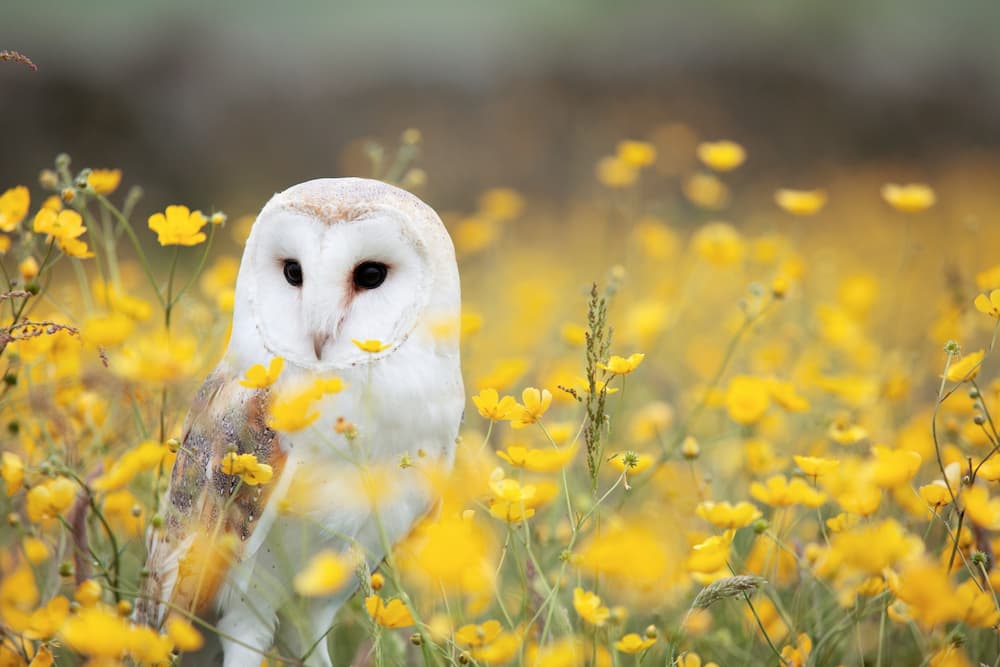
- Barn Owls hunting along the field margins, sometimes even in broad daylight.
- Curlews calling over the pasture with their unmistakable wild cry.
- Lapwings displaying above the surrounding ground in spring.
- Spotted Flycatchers using the site during the breeding season.
- Yellowhammers bringing their distinctive song to the surrounding farmland.
There were other memorable moments too: willow warblers singing from the hedgerows, wrens calling from scrub, bullfinches feeding on fresh buds, pied wagtails searching around disturbed soil and hoofprints, and buzzards circling overhead.
The variety of birds reflected the mixture of habitats found across and around the site, including pasture, hedgerows, mature trees, wet ground and nearby water.
It also reminded us that wildlife does not recognise ownership boundaries. Many of the birds recorded would have moved between the site and the wider surrounding landscape.
Bird Species List 2025
Below is the full list of birds recorded during our year at the site.
Bird Conservation Status: 🔴 Red — highest concern | 🟠 Amber — moderate concern | 🟢 Green — low concern
Birds — 62 species (click to expand)
A–C
Barn Owl 🟢Blackbird 🟢
Black-headed Gull 🟠
Blue Tit 🟢
Bullfinch 🟠
Buzzard 🟢
Canada Goose 🟢
Carrion Crow 🟢
Chaffinch 🟢
Chiffchaff 🟢
Coal Tit 🟢
Common Gull 🟠
Common Redstart 🟠
Cormorant 🟢
Curlew 🔴
D–L
Dunnock 🟢Fieldfare 🔴
Goldcrest 🟢
Goldfinch 🟢
Great Spotted Woodpecker 🟢
Great Tit 🟢
Greenfinch 🔴
Grey Heron 🟢
Greylag Goose 🟠
House Martin 🔴
Jack Snipe 🟢
Jackdaw 🟢
Kestrel 🟠
Lapwing 🔴
Lesser Black-backed Gull 🟠
Lesser Redpoll 🔴
Little Egret 🟢
Long-tailed Tit 🟢
M–P
Magpie 🟢Mallard 🟠
Meadow Pipit 🟠
Mistle Thrush 🔴
Moorhen 🟠
Nuthatch 🟢
Oystercatcher 🟠
Pheasant 🟢
Pied Wagtail 🟢
Reed Bunting 🟠
Robin 🟢
Rook 🟠
S–W
Shoveler 🟠Siskin 🟢
Skylark 🔴
Song Thrush 🟠
Sparrowhawk 🟠
Spotted Flycatcher 🔴
Starling 🔴
Stock Dove 🟠
Swallow 🟢
Tawny Owl 🟠
Teal 🟠
Treecreeper 🟢
Willow Warbler 🟠
Wigeon 🟠
Wood Pigeon 🟠
Wren 🟠
Yellowhammer 🔴
Butterflies Recorded During 2025
Butterflies can reveal a great deal about a landscape. Their presence is influenced by flower availability, vegetation structure, shelter, sunlight and the availability of suitable larval food plants.
During the year, we recorded 17 butterfly species.
Highlights included:
- Small and Large Skippers moving among the grasses.
- Green-veined Whites and Orange-tips appearing during spring.
- The easily overlooked Purple Hairstreak.
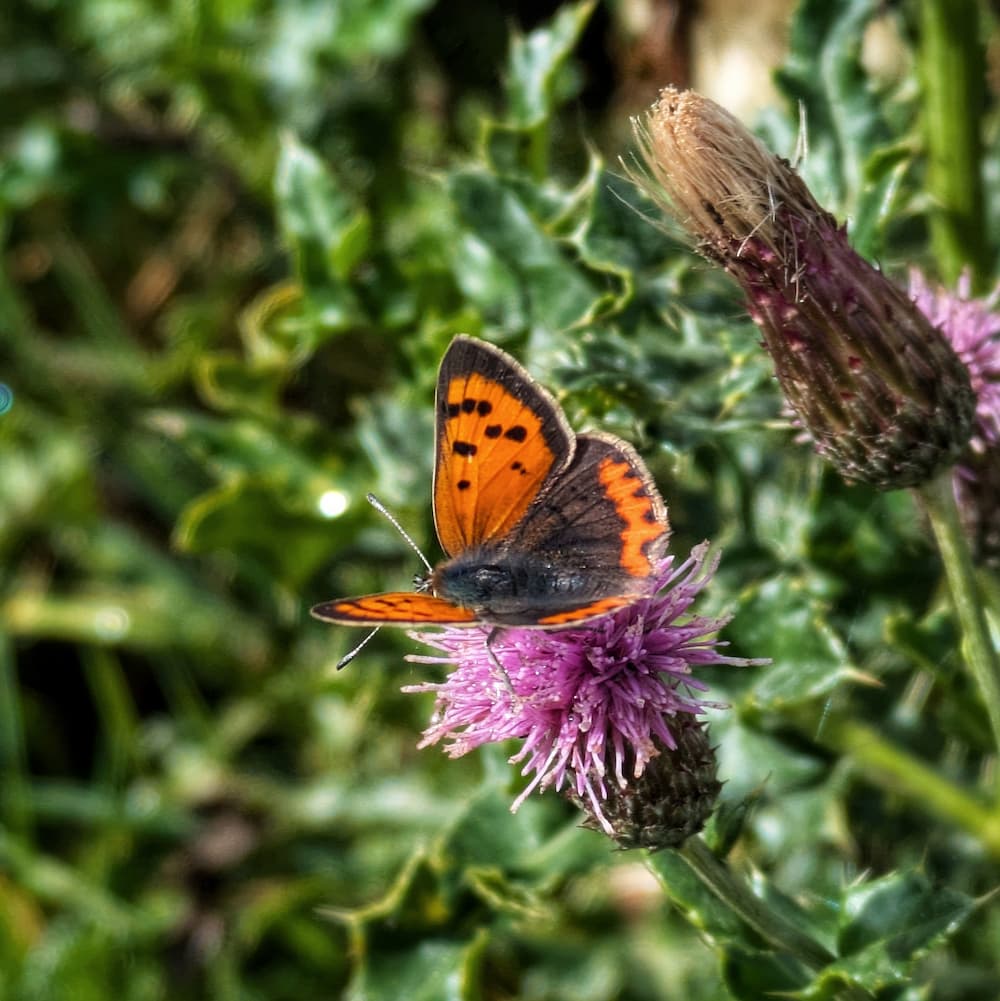
- Small Coppers glowing like dropped embers in warmer open areas.
- Meadow Browns, Ringlets and Speckled Woods along the edges and pathways.
- Red Admirals, Painted Ladies, Peacocks, Commas and Small Tortoiseshells adding further variety through the year.
Together, these records provided a useful snapshot of the butterfly community present near the beginning of our involvement with the land.
As with the bird records, the list should not be treated as exhaustive. Butterfly activity varies with weather, season, survey effort and the time of day, so species may have been present without being observed.
Butterfly Species List 2025
Below is the full list of butterflies recorded during our year at the site. Under the Red List of Butterflies in Great Britain used when this survey was compiled, all were classified as Least Concern.
Butterflies — 17 species (click to expand)
Skippers
Small SkipperLarge Skipper
Whites
Large WhiteSmall White
Green-veined White
Orange-tip
Hairstreaks
Purple HairstreakCoppers and Blues
Small CopperCommon Blue
Nymphalidae
Red AdmiralPainted Lady
Small Tortoiseshell
Peacock
Comma
Speckled Wood
Meadow Brown
Ringlet
Where Do the Highland Cattle Fit In?
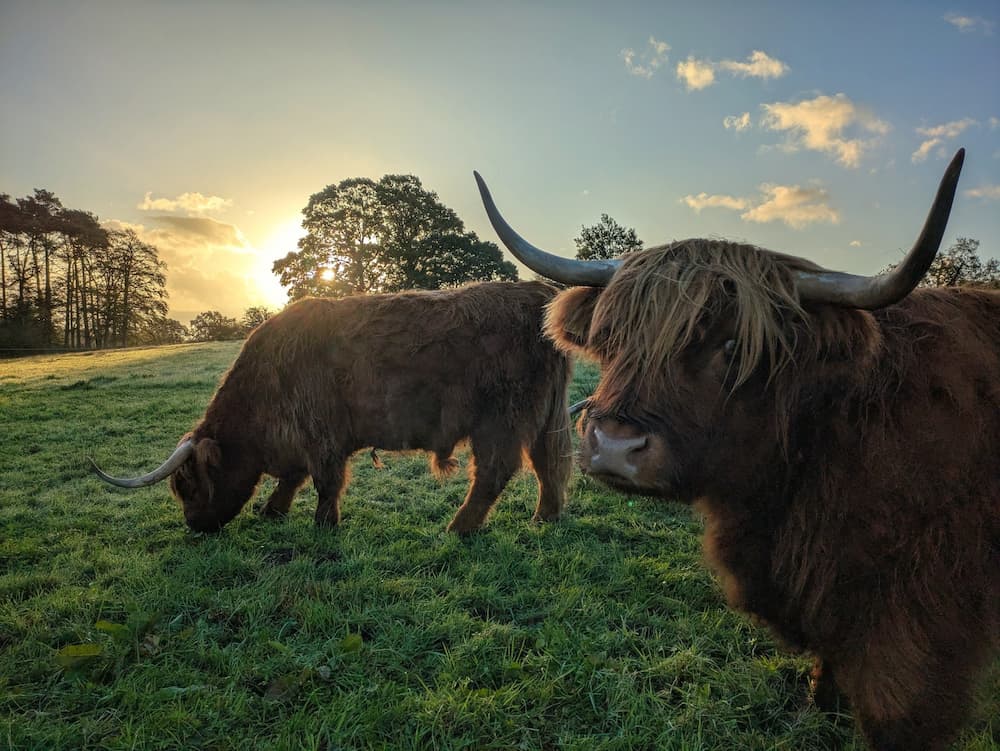
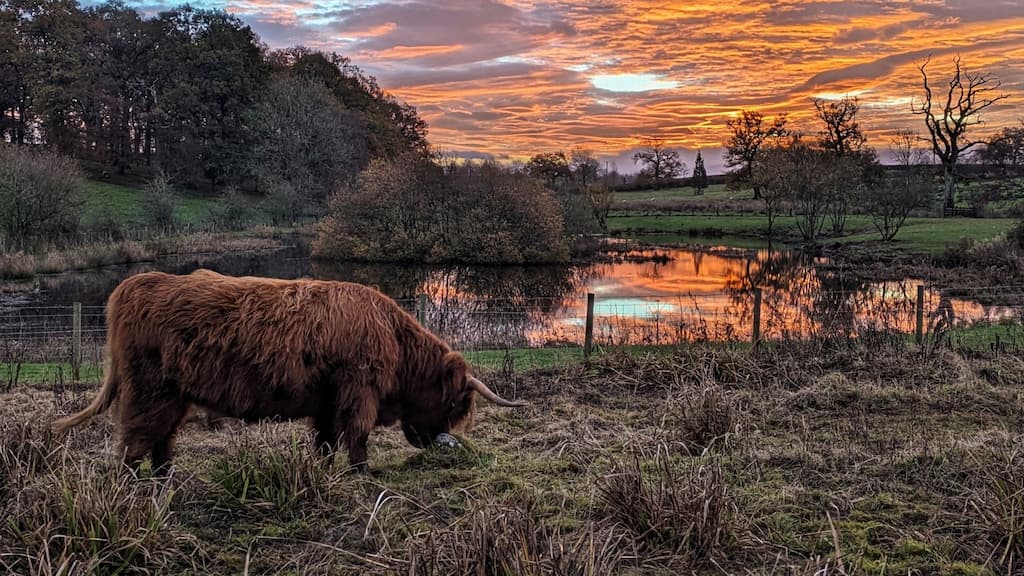
Highland cattle can influence a landscape through selective grazing, trampling, browsing and dung deposition. We explore this wider approach further in our post on regenerative grazing.
Rather than creating one uniformly short sward, carefully managed grazing can help maintain a varied mixture of shorter grass, taller vegetation, tussocks, small areas of disturbed ground and developing scrub.
That structural variety can provide different opportunities for plants, invertebrates, birds and other wildlife. The precise effects, however, depend on factors such as stocking density, timing, grazing duration, soil conditions and the habitats already present.
At this former site, our Highland cattle had only recently begun grazing when the 2025 records were made.
They had not been present long enough for us to attribute the birds and butterflies recorded during the survey to their influence.
The records therefore represent the species known to be using the site near the beginning of our involvement, rather than evidence of ecological improvement caused by the herd.
That distinction matters. Responsible conservation should be based on observation and evidence, rather than assumptions about what a particular form of management ought to achieve.
What the Survey Continues to Teach Us
We are no longer responsible for this particular site, so we cannot carry out the long-term comparison originally intended.
Nevertheless, the survey remains valuable.
It reinforces our belief that land management should begin with observation. Before deciding what needs to change, we first need to understand the habitats and species already present.
It also reminds us to be cautious about claiming results. Ecological change takes time, and a new sighting does not automatically prove that a particular intervention caused it.
Where possible, we aim to record conditions before management begins, continue monitoring afterwards and adapt our approach in response to what the land shows us.
The experience continues to influence the principles behind The Fringe And The Fold: thoughtful grazing, respect for existing wildlife and a commitment to understanding land before deciding how it should change.
A baseline is not a trophy list.
It is the beginning of paying closer attention.