Every hoof-step, every pause, every shift in the herd leaves a trace — not just on the surface, but deep in the soil. Regenerative grazing is the quiet art of working with those traces, letting cattle shape the land gently, naturally, and in rhythm with the seasons.
For us, this is a new journey — a learning path we’ve chosen to walk together, with a clear goal: to increase biodiversity, improve soil health, and create a thriving ecosystem where nature and animals flourish side by side.
What Is Regenerative Grazing?
At its heart, regenerative grazing is about healing the land. It’s a practice that involves moving cattle frequently, allowing pasture to rest and recover between grazing periods. Rather than treating land as just a resource to be used, regenerative grazing recognises the deep interconnection between soil, plants, animals, and people.
The idea is simple, but the results are powerful: healthier soil that holds more water and carbon, more diverse plant and insect life, and stronger, happier animals.
Why We Chose This Path
When we began managing our land in the Eden Valley, we wanted to do things differently. We wanted to step away from industrial farming practices that often degrade the soil and reduce biodiversity. Instead, we wanted to work with and for nature, not against it.
We believe that managing our cattle and pasture in a way that uses regenerative principles offers a way forward — a way to restore the richness of the land, build resilience to climate change, and create a place where wildlife and livestock coexist in harmony.
This approach asks us to be patient, to observe, and to listen closely to what the land and our Highland cattle are telling us.
How We Practice Regenerative Grazing
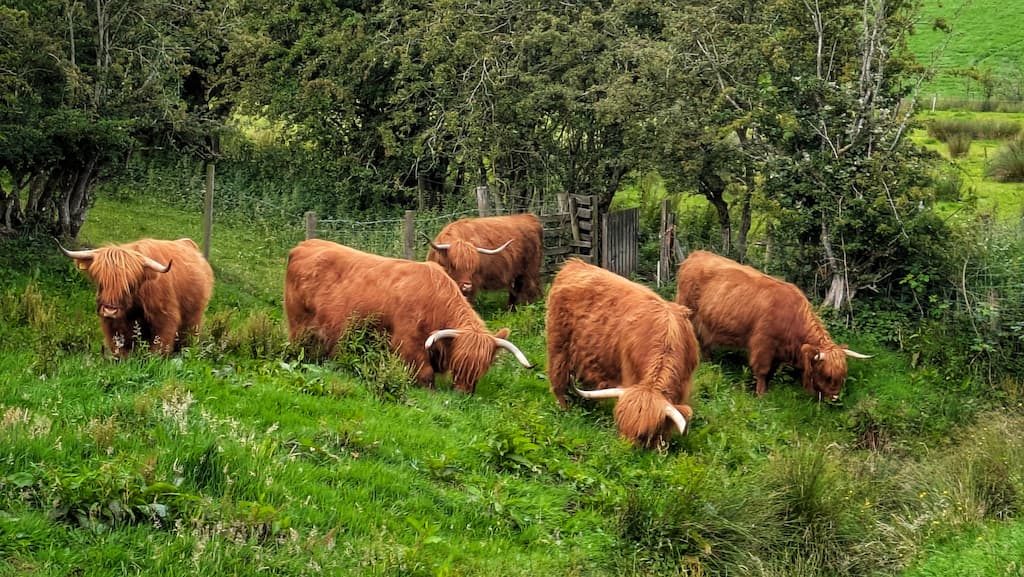
To mimic the natural movement of wild ruminant herds, we divide our pasture into smaller sections using electric fencing. This allows us to concentrate the fold’s grazing pressure in a controlled manner, similar to strip grazing.
Wild herds don’t graze an entire grass plain all at once. They move in tight groups, grazing one spot intensively for a short time before moving on. This pattern prevents overgrazing, distributes manure evenly, and encourages plants to grow back stronger.
By moving our cattle frequently — sometimes every day — and then giving the land a long rest, we try to replicate this natural rhythm.
The Benefits of Regenerative Grazing for Soil and Biodiversity
One of the most exciting things about regenerative grazing is watching the land respond.
By allowing our grazed pastures time to rest, we encourage plants to develop deep roots. These roots help build organic matter in the soil, which improves water retention and stores carbon — key factors in fighting climate change.
We hope to see more wildflowers and native grasses returning to our fields. These plants support insects, bees, and birds, creating a richer and more balanced ecosystem.
The Wellbeing of Our Highland Cattle
Our cattle are at the heart of this system.
Because they graze on fresh pasture daily, they have access to a varied, natural diet of grasses, herbs, flowers and even tree leaves, bark and twigs from the hedgerows. This variety supports their health and wellbeing — their coats are glossy, hooves strong, and behaviour calm and social.
We don’t rush them or push for fast growth. Instead, we let them thrive at their own pace in a low-stress environment.
Healthy soil and diverse plants mean healthier animals — and healthy animals help keep the soil fertile. It’s a relationship built on balance.
What We’ve Learned So Far
This is a new adventure for us, and we’re learning every day.
We’re discovering the importance of timing — knowing when to move the herd, how long to rest the land, and how weather affects growth.
We’re learning to watch the grass, the soil, and the cattle closely, adjusting our approach as we go.
There have been challenges, too: figuring out the fencing layout, dealing with wet weather, and balancing stocking density.
But each step teaches us more about how to nurture this partnership between land and livestock.
Looking Ahead
Our goal is to build a resilient farm ecosystem that benefits the whole web of life — from the tiniest microbes underground to the birds soaring overhead.
We want to leave the land richer than we found it: more natural, more diverse, and more alive.
Regenerative grazing is not a quick fix, but a long-term commitment to care, respect, and stewardship.
We’re excited to share this journey with you as we grow, learn, and deepen our connection to this special land in the Eden Valley.